
A leader should always be learning
Chip Hutcheson
Aug 1, 2026

A successful newspaper needs a strong leader. That principle can be downright scary to many people who find themselves rising from the ranks to lead a newspaper — or any organization, for that matter.
When I became publisher of our family newspaper at age 28, I wasn’t prepared to be a leader. The only redeeming factor was that the weekly newspaper only had two employees, and one of those was my mother.
But 16 years later, the situation dramatically changed. My paper and a competing weekly both sold to a nearby daily, and a conversion to a twice-weekly paper ensued. Now I was overseeing that conversion and printing operation where my knowledge was greatly limited. But the biggest challenge was going from three employees to 18.
From then on and for several (perhaps numerous) years that followed, leadership had its challenges — most of them self-inflicted.
I made many bad decisions in the 1990s. Perhaps the biggest was my failure to understand that not everyone placed the needs of the newspaper above everything else.
That’s best illustrated by a very talented ad rep who became a grandmother and couldn’t understand why I kept pestering her about coming back to work less than a week after that grandchild was born. The newspaper had always had top priority in my life, and I thought it should for everyone else — even for the employee who lived paycheck to paycheck.
Yes, the work was important, but my biggest leadership challenge was to put myself in the shoes of others. It went back to a Golden Rule principle — do unto others as you would have them do unto you. Embracing that tenet was helpful in becoming more sympathetic to the needs of my employees.
I learned a valuable lesson that goes back to a Theodore Roosevelt quote: “People don’t care how much you know until they know how much you care.” My attitude toward that ad rep changed so much that when she resigned to (successfully) run for mayor of our town, I gave her 100% support — even though she would be next-to-impossible to replace. She died two years ago, but our relationship was so strong that her family asked me to preach at her funeral.
There are so many mistakes that a leader can make, but it’s crucial to understand that no leader is perfect and that a leader should always be learning. Having high expectations is one thing, but having unrealistic expectations is another.
Perhaps second on my list of important qualities for a leader is learning how to make wise decisions. Notice I didn’t say avoiding a bad decision, but making the wisest, best decision.
CONSIDER THESE HINTS THAT THE DECISION YOU MAKE MIGHT NOT BE THE BEST
• It makes everyone happy. Odds are you’re settling for less than best. The best decisions almost never please everyone.
• It’s easy. Some decisions are easy, but often, they are not. There are complicating factors that must be dealt with. That’s especially true in major decisions.
• You made it alone. There is a Bible verse, Proverbs 15:22, which provides a great truth: plans fail for the lack of counsel. With many counselors, plans succeed. Just be careful who your counselors are. And when you get good advice, don’t hesitate to put it into action.
• You made it too quickly. Some decisions may seem at the outset too easy, but take a little time to make sure you have thought completely about it. Most major decisions need a good night’s sleep — or several.
• On the other hand, you made it too slowly. When you’ve wrestled with it long enough — and you know the right thing to do — some decisions just need to be made. You might not have all the answers, but don’t let them hinder you from acting.
• It changes nothing. Change is a part of leadership. Without change, you don’t need a leader. People can stay the same on their own.
A factor to consider when determining if your decision is the best one:
• Listen to your gut. You have a gut for a reason. Sometimes you believe you know what to do, but there is that undercurrent in your mind that says it just doesn’t seem right. Don’t ignore that. Make sure you have peace with your decision;understanding that it might cause a little pain, but the pain will be worth it.
As a leader, one of the greatest challenges is making the best decision about who you will hire to join your team.
HIRING DECISIONS ARE OF GREAT IMPORTANCE. HERE ARE SOME THINGS TO TAKE INTO CONSIDERATION
• Know what you want. You might have the idea that “I’ll know the right person when I meet them,” but that is not always the best mindset. Be clear on what you are looking for. Having a written job description is helpful in this regard.
• Stick to your hiring criteria. Never lower your standards, but don’t be so rigid that you overlook someone who is capable. I know of newspapers that require a college degree. That might work for a metro paper, but not in small-town America. One of my best writers/photographers did not have a college degree. I hired him on a temporary basis, telling him, “Let’s see how this works out.” It didn’t take long to realize he had what it took — just not a college degree. He went on to win not only state press association awards, but awards from NNA.
• Don’t be swayed by your bias. We all have biases, but that can get us into trouble. Make sure that your hire will complement your current workforce.
• Always be alert to team culture. A candidate might have a great resume, but does the person seem to be a good fit for your current staff? Take time to evaluate whether the person’s ego might be a detriment.
• Don’t sell your organization’s virtues and values. The candidate will pick up quickly those attributes. It’s OK to talk favorably about your team and the culture, but be honest about its shortcomings. It’s vital that you are honest with the candidate.
• Don’t hesitate to ask the tough questions. The interview process is time to ask questions that need to be asked. You can be polite and respectful, but don’t hesitate to find out what you need to know about the candidate. Avoid yes or no responses. Ask about their experiences; ask for examples on how they would handle a certain delicate or touchy situation. Ask about their failures.
As a leader, you won’t always make the best decision. But be intent on not allowing any miscues to subvert you from being the best leader possible. Be transparent. And don’t let your ego get in the way of overcoming a decision that doesn’t pan out like you expect it to.
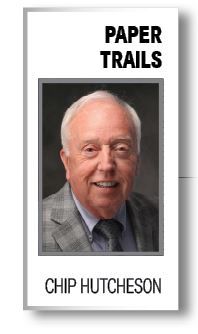
Chip Hutcheson is the retired publisher of The Times Leader in Princeton, Kentucky. He was NNA president in 2015. He currently serves as a content strategist for Kentucky Today, the online news website of the Kentucky Baptist Convention. Email him at chiphutcheson@yahoo.com